Europe 2018

I was fortunate to spend almost 3 weeks in Europe this past spring. I hadn’t gone to Europe at all the year prior, which is strange for me. I often prefer to focus on visiting one or two European countries at a time. This way I can absorb as much culture and history as possible. However, this time I decided to jump in and out of several countries in one trip.

We started out in Amsterdam. Honestly, I had high expectations for this place because people always tell me how much they love it. The canals were pretty cool, and I had the most fun riding a bike with all of the locals. I also enjoyed the Anne Frank Museum and the Van Gogh Museum. Seeing tulips in the Dutch country was a nice bonus as well.


Next, we went to Copenhagen, Denmark. Unfortunately, winter lasted forever this year so we ended up stuck in a snow blizzard while we were visiting. The food was quite on the pricey side, an average meal (without drinks) costing $30+.

I didn’t care for Copenhagen much; the people are pretty stoic and all look alike. It made me feel like I was in a fake world.

I was relieved when we arrived in Berlin, Germany. I ended up liking it much more than I expected. First of all, it is very diverse. There are tons of middle eastern and eastern Europeans there. It felt nice to interact with normal people. In addition, there was so much history there and I liked how the Germans made their history free and public through outdoor museums. I respected how they did not try to hide their history but encouraged the community and tourists to learn about their dark history, and factors that had caused it.


The fourth country on our list was Belgium. It was definitely a plus in my book since they spoke French and I felt like I could finally understand what everyone was saying (despite them being able to speak English in all of the other countries we visited). It was an amazing culinary experience. From chocolate, to mussels, to Belgium waffles. I think we were all in heaven.


Lastly, we ended the trip with Switzerland. Our first stop was Geneva and it was more beautiful than I could have ever imagined. The snowcapped swiss alps in the surrounding lakes of clear blue water was breath taking. Switzerland was by far the most expensive place I have ever been to. The average meal was $40 and a bottle of water cost $7. You could tell everyone there had money. They all dressed well, even better than Paris. Most of them had luxury cars such as porsche and ferrari’s.

Halfway during our stay, we participated in a chocolate factory tour for Nestle. It was interesting to learn about how it is manufactured and we were able to sample various types of chocolate. Afterwards we drove to Zurich and Lake Lucerne. They were also marvelous towns but seeing the swiss country on the way over there provided the best sights. In Geneva, the Swiss spoke French, whereas in Zurich they spoke German. I was told that in southern Switzerland they speak Italian. Pretty cool that the countries they border have some cultural influence on them.

I had a great time but was pretty exhausted by the end. I will make a follow up post to this, to show you how I saved a lot of money by booking my trip with miles and points.


Follow up on Survey about Pay

A couple of months ago I posted a survey to assess how various locum tenens nurse practitioners are being paid and which states paid them the highest rate. I wanted to share the results with my readers to make sure you are requesting the correct rates.

The hourly rate between family nurse practitioners and acute care nurse practitioners were pretty similar. However, there was such a vast range of pay rates for locum tenens nurse practitioners as a whole. Here is a summary of the survey results.

  • Locum tenens family nurse practitioners have made as little as $50/h and as high as $95/h.
  • Locum tenens acute care nurse practitioners have made as little as $60/h and as high as $100/h.
  • The average nurse practitioner made $70/h while on assignment.
  • Some of the highest paying states are Washington, California, Pennsylvania, Iowa, and Connecticut.
  • Some of the lowest paying states are Florida, Georgia, Alabama, and Texas.

What does this mean?

Your hourly pay rate will depend on experience and location. If you have at least 1 year of experience as a nurse practitioner, please try not to accept less than $60/h.

If your goal is to be in a certain location or you are passionate about helping the native American population, then by all means you can take the temporary pay cut.

If you are driven to work in a state that pays well, see the above recommendations. Note that it is often rural areas that will pay the highest rate.

Just because someone noted they have been paid $85/h before doesn’t mean they will be paid this rate EVERYWHERE they go. They possibly worked in a rural area with a large need. Maybe on their next assignment they wanted to be in a big city in a different state and had to take a $5-$10 pay cut. I personally don’t mind a pay cut if it’s a prime location I want to be in or if the clinic is not that busy.

During nurse practitioner week, I remember reading somewhere “everyone wants a nurse practitioner but no one wants to pay for one.” That’s awesome that we are helping fill the primary care gap and especially in rural populations. But let’s remember that in order for us to be compensated appropriately, we’ll need to ask for fair pay and to work together. There should not be any nurse practitioner seeing ~30 patients per day (non-urgent care), nor should there be nurse practitioners being paid <$60/h.

Any thoughts?

Self-Licensing vs Using an Agency

I recently published an article on www.nurse.org called “Self-Licensing vs Agencies: What’s Best for Travel Nurses”. The article discusses when it is beneficial to obtain a license on your own and when it makes sense to get it through an agency. To read the entire article click here.

I also published another article on that site explaining to nurses how they  can upgrade their current nursing license to a compact license depending on their residential state. For more information you can find the article here.

Below is is a map of the eNLC (enhanced nurse license compact) states. The ones in green have already implemented the multistate licenses, while the ones in blue are pending approval.

Exploring Texas

I was able to adjust my schedule doing home assessments, where I could have 3-day weekends. I took advantage of this time do some weekend trips to other cities in Texas.

I mostly enjoyed visiting San Antonio due to its abundance of history. It houses the famous Alamo and multiple Missions, which are settlements where Spaniards and Natives inhabited.

Of course I ate some really great Mexican food and Bar-B-Q! I recommend La Fonda if you end up in San Antonio.

I was looking forward to going to the Riverwalk downtown and it exceeded my expectations. The San Antonio river is much longer than I thought. It’s incredible that you are able to walk along the river to end up in different parts of the city. You can have dinner on the river, go to the mall on the river, visit the Alamo on the river, or stay at a hotel on the river.

Another highlight was visiting Waco, Texas as a big fan of the show “Fixer Upper”. I felt like a child at Disney World! It was really cool to see everything in real life that I watched coming together on the show. Joanna’s cupcakes did not disappoint. I purchased a few items from the Magnolia store. I may have bought even more things but the two-story store was extremely busy and full with tons of people.


If you plan on visiting the Magnolia Market someday, make sure you get there early in the morning.

My Favorite Part of Home Assessments

Honestly, I am not a big fan of doing home assessments. I prefer being in a traditional environment. On the other hand, I did enjoy the extra time it allotted me to connect with patients. I think I have a soft spot for geriatric patients specifically.

While I asked pertinent health related questions, performed a physical exam, and provided patient teaching, I was able to get to know the patient at a deeper level. They shared stories about their families and prior occupations. They elaborated on health care struggles and their appreciation for nurses. When I was done with the visit, I often lingered a little bit longer to hear more stories or if the patient insisted, on looking at pictures of their family or finished products of their current hobbies.

I appreciated the opportunity these home assessments allowed me to see life from a different perspective. There were times of sadness when I met a 90+ year old patient who lived alone and told me he did not have any living relatives or friends. There were occasions where I laughed hysterically as an elderly couple in their 80’s (in great health condition) made jokes about recovering from colon cancer, skin cancer, and even eye cancer. There were moments of joy to see a patient’s daughter or grandson be involved in their parents/grandparent’s care. There were flashes of worry when I realized many seniors live in trailer homes and wondered what would happen to them if another hurricane came along to the south of Texas.

My favorite part of this assignment were my interactions with the patients. They reminded me how to appreciate life on a daily basis and those close to me. I also thought about my geriatric patients in Virginia. That I wish I had done a home visit for each of them because you learn so much about them that way.  You discover what type of condition they live in and how much social support they truly have. Whether they need assistance at home or if they have an environment that will enable them to take their medications appropriately.

I think many healthcare professionals are reluctant to do home visits because patients may live in unsafe areas or live in unsanitary environments. But I believe it is essential to know our patients at this level in order to better understand them and provide them the best care.

At the end of some of my visits, the patients would say “I wish there was some way I would see you again.” That broke my heart, but also made me happy I was able to touch someone in such a brief encounter.

Home Assessments

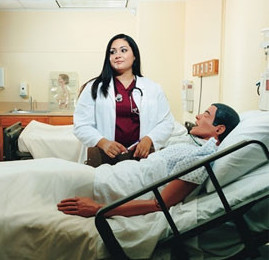
As I mentioned in my previous post, I have been working in Texas doing home risk assessments. Health insurances want these assessments done on their patients yearly, to identify gaps in their health care. Examples of these gaps include: poor medication compliance, home safety issues/increased risk of falls, and the need for specialty referrals.

Home assessments have their advantages but is isn’t for everyone. Here are some pros and cons for doing home risk assessments:

Pros:

-Flexibility: Your schedule can be what you make it. You can work weekends or 4 days of 10-hour shifts. You can even finish your shift early if you stay on task and go home hours early.

-Easy: the job itself is pretty easy as you are just asking a thorough history and screening questions, along with performing a physical exam. No treatment or prescribing needed. This job is pretty much stress free.

-Patients are happy: The patients are nice and welcoming. They usually are just grateful having someone to talk to and love that you are there.

-Mileage: You are getting paid to drive to the patients homes via mileage reimbursement. The scheduler will usually keep the distances short, and you can include mileage to and from your hotel. I usually profit $100 each week after gas expenses.

Cons:

-Atypical environment: Obviously you are working in other people’s homes. Unfortunately, not everyone is sanitary. Some bad experiences were being in a small apartment with a dozen cats and cat poop everywhere; feeling like you are in an episode of hoarders; smelling like smoke after you leave…

-Documentation: The assessment paperwork is extensive. Sometimes if the patient is a chatterbox or really sick, then you may have to bring paperwork home, and this can easily take an extra couple of hours of your time (unpaid).

-Equipment: You have to lug around an equipment bag to each visit. Inside is a laptop that requires about 5-10 min of setting up (extensive log-in process). You are also given a mobile wifi device. Many times the wifi device does not work (many patients do not have internet) so you will have to do all of the charting at home.

-Weather: Rain or shine you still have to do these home assessments. One day it was windy and raining tremendously. I got soaked arriving to a patient’s door, and they ended up not even being home!


My first day I knew home assessments wasn’t for me. The more days I worked though the more comfortable I became. Honestly, the patients were so kind that mostly stuck around for them. You can see I had more cons than pros.

Another aspect I want to mention is that you are paid per assessment, not hourly. So if you go to a patients house and they are not home, you will not get paid for the completed assessment. Instead you are paid for a “no show” which is a little less than half of what you would have been paid for a completed assessment. If a patient cancels prior to their appointment, this means no pay. If you are very financially dependent on this job, I wouldn’t recommend home assessments. Also, you have to make sure to finish the documentation thoroughly, if not the company will keep sending it back to you until all items are addressed.

If you are looking for something flexible and easy, home assessments may be for you. I personally think I am better suited for the clinic where I feel that my work is more impactful. With that being said, I may possibly me open to home assessments again in the future for a brief stint.
Howdy Texas!


Thinking about my next assignment I knew I wanted to go somewhere new. However, it was still winter so my options were naturally limited. I decided that the most important factor in choosing my next assignment would be that it would have to be in Texas. I already had a license there that I never used.

I have always been interested in working as a locums nurse practitioner in Texas. I was curious to see why many young professionals opted to move there. Were the abundance of jobs and affordable houses worth it?

I wasn’t in a rush to start working, thus I had enough flexibility to be patient until a job in Texas opened up. It seems that finding a locums position in Texas isn’t that simple. Like Florida, Texas is one of those states that is saturated with nurse practitioners. This means they don’t have has many locum needs, and if they do, they prefer local candidates.

Fortunately, it only took about one week for something to come up. My main goal was to get to Texas. I was willing to sacrifice pay and job type, just to end up there. So, I ended up settling for a home assessment gig (more on that in my next post).

Has Texas lived up to the hype? As a matter of fact, yes! Despite their reputation, Texans are sincerely the nicest people I have ever met. They greet you everywhere you go and everyone has a smile on their face. They are so friendly that they even go out of their way to make conversation with homeless people, instead of pretending they don’t see them like most Americans. Texans are also patriotic and are so proud to be both American and Texan.

Texas has multiple major cities, each with its own flavor. There is an abundance of young professionals, so it’s great being able to make friends on my level. Of course, the houses are beautiful AND cheap (coming from Miami). The traffic isn’t major (outside of Houston and Dallas), and people know how to drive (compared to Miami). Gas is cheap (duh). Food is delicious.

A few drawbacks: everyone has a truck here – except me. My convertible doesn’t fit in but seems to get a lot of compliments (since everyone is so nice remember?). It can be scary sometimes being in a small sports car in between nothing but trucks. Texas is a bit dusty/dirty. There is more dirt than grass, which leads to outdoor items (mainly car) staying dirty all of the time. There is no Publix supermarket (if you aren’t from the south east, you won’t understand what you are missing out on). Florida beaches > Texas beaches.

Fortunately, I won’t be here during the summer. The weather has been cool, and I get to avoid the scorching heat.

When the day comes that I settle down, I wouldn’t mind living in Texas. It’s only a 2.5 hour flight to Miami and the people have undeniably won me over!

Guest Blog: Rural California

Wide open spaces, clear starry nights, deer in my back yard on a daily basis and an extremely low cost of living are reasons why I’ve chosen to work in rural California.  My friends often ask “Do you really live in the country in California?”  Yes I tell them and I love it!

I’ve been a nurse practitioner since 2011 and love what I do. It’s a second career for me  My former career had me working as a corporate executive for large pharmaceutical companies. I got tired of flying coast to coast on private Gulfstream jets, dining at 5 star Michelin restaurants and staying at swanky hotels while working way into the evening to meet the next quarter’s numbers for Wall Street.  Some ask how could you get tired of that.  I say, do it for 5 years and tell me how you feel. You really have no life beyond “the job”. I sold my soul to corporate American while in my 30s and never will again.

Being a nurse practitioner in rural Southern California is not bad at all. My patients are happy to see me and for the most part I enjoy going to work every day. I’m close enough to the big cities to enjoy what most people consider So Cal. It takes me an hour to get to LA and an hour and a half to get to Ventura so I can enjoy my boat.

I’ve chosen to work in locations that are within an hour or two from the ocean as on the weekends I spend my time on my yacht.

Rural medical clinics generally have to pay their locums a higher hourly rate as not many providers want to live in the country. The higher rates are great as the cost of living around the rural clinics is usually 1/2 to 2/3 less than living in the city.  There are drawbacks to living in the country. My water gets trucked in as I have no city water service.  I have to use satellite internet as the cable providers don’t come out here .  The closest real grocery store is 45 minutes away and any type of city dweller dining/entertainment is also an hour’s drive away.

You can get used to it quickly when you see the $ piling up in your bank account from the low cost of living and the higher rates of pay you get as a locum. I would never do this job as a full time clinic employee. The clinics will always ask you to join full time but my experience has been you can make an extra $100,000 a year as a locum.  Of course you have to buy your own benefits, plan your own retirement and pay self employment taxes but in the end it works out for me.  I wouldn’t do anything else for a  NP job and plan on staying a rural NP for as long as I can.

-Ben

Goals in 2018

With the new year, I knew that I definitely did not want to work as much as last year. I somehow got caught up in being a workaholic. This is a big no-no for a millennial. I told myself that this year I would take more time to travel abroad, and possibly more time off to focus on myself.

As both a locum and as a nurse practitioner, it’s quite easy to fall into the trap of workaholism. Recruiters are forever letting you know when there is a job available and asking you when you are next available. Sometimes, you just have to learn to say no and even establish some distance between yourself and recruiters.

Recently there have been two comments made by friends of mine that have enabled me to reflect. One fellow nurse told me: “you are lucky you get to travel everywhere!” As tiring as locums can be at times, she is right. In my opinion, there is nothing better than being able to travel to new places. I am sure locums hear this all of the time, but I think I hadn’t heard it in a while.

The second comment was from a good friend that is interested in becoming a traveling nurse practitioner. She told me: “I just started reading your blog and I am so excited to start!” I was actually surprised by her statement because she used to tell me she had no interest in traveling in general. I asked her what exactly made her excited from my blog, and she told me: “one of your first posts about working in Washington state.”

I looked up this post on my site and read it for the first time in about 2 years. I realized I had appreciated the smallest things at that time, and how spoiled I have become.

I am hoping this reflection will allow me to take on my next assignment with a different perspective.


5 Ways Travel Nursing Can Help You Pay Off Student Loans

I recently wrote an article for www.travelnursing.org on how travel nurses can take advantage of their new occupation to pay off student loans. Some of it is also relevant to traveling nurse practitioners.

Check out the original article here.

One of the most amazing benefits of being a travel nurse, is being afforded the opportunity to pay off student loans. By following an appropriate budget and using extra income allotted from travel nursing, you may be able to eliminate student loan debt faster than expected.

1) Non-Taxed housing stipend – While working as a travel nurse you will have the choice to receive a non-taxed housing stipend or have your agency coordinate housing. If you’re looking to pay down debt, we recommend taking the stipend and living within your means. By saving on housing costs you can then “pocket” the remaining stipend to put towards paying off your student loans instead. As an added bonus, you can also opt for a housing stipend from your agency. Some travel nurses will rent out a basic room or purchase second-hand furniture (to sell when they leave) – this additional cash will come in handy to pay off debt.

2) Meal and incidental stipend – Travel nurses receive non-taxed stipends for meals and other incidentals while they are away working. This can be an additional few hundred dollars beyond your weekly paycheck. In many cases, they also receive non-taxed travel stipends to alleviate some of the costs incurred from traveling from place to place. Most agencies reimburse $500-$1000 of travel expenses per assignment.  This helps you save money on necessary expenses and provides available funds to pay off your student loans.

3) High pay – It is quite well known that working as a travel nurse pays better than working as a staff nurse. In some states, such as California, nurses are even paid double the typical pay in other states. Commit yourself to continue living on your previous salary and use this extra income to get rid of your student loan debt!

4) You don’t shop as much when traveling – When living out of a suitcase, you cannot afford to shop due to limited space. Most professionals have a shopping budget, but as a travel nurse there is no need for shopping. Since you cannot buy tons of things and bring them around with you, many travel nurses avoid shopping altogether. This allows more savings towards student loans.

5) Work overtime – The majority of nursing shifts are three 12-hour shifts. This allows nurses 4 days off, plenty of time to be out and about wasting money. Instead, it makes more sense to pick up extra shifts at work. This way, you can make time and a half pay to use towards paying off your student loans, instead of blowing your budget.

Plenty of travel nurses have been successful paying off their student loans. Many of them account the above benefits of travel nursing that enabled them to become student loan debt free. If you are tired of carrying around the burden of student loans, sign up today to begin an exciting career in travel nursing!